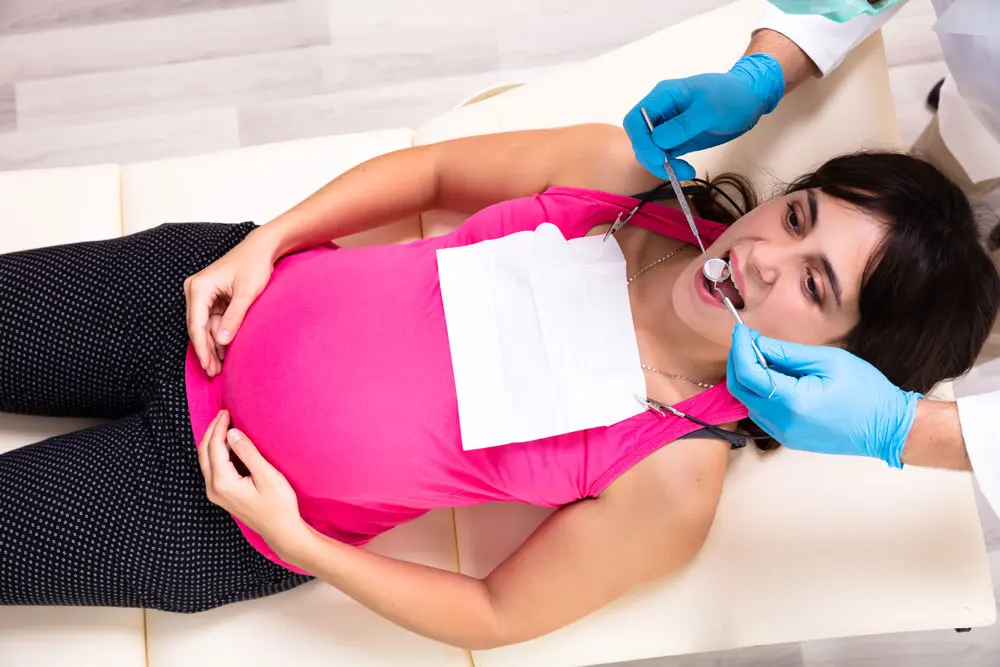
Dental care is a crucial part of your overall health and wellbeing, and an essential part of your prenatal care too. Pregnancy increases the likelihood of certain dental health issues, which could potentially lead to further complications throughout your pregnancy if left unchecked. Keep attending your standard dental check-ups throughout pregnancy, let your dentist know you’re pregnant, and if you’re ever concerned about your dental health, see your dentist as soon as you can.
On this page
At a glance
- Pregnancy hormones can increase your risk of gum disease and other oral health issues.
- Studies suggest a link between gum disease and premature birth, so dental care matters for your pregnancy too.
- Changes in eating habits, tiredness and nausea can make brushing and flossing harder to keep up.
- Watch for bleeding, sore or receding gums, new gaps between teeth, or persistent bad breath.
- Routine dental check-ups are safe and recommended throughout pregnancy – just let your dentist know you’re expecting.
What Is Dental Health And How Does It Affect Pregnancy?
Dental health concerns the health of your mouth, teeth and gums, and is an important part of your overall health and wellbeing. Being pregnant increases your risk of oral health issues, and these problems can in turn impact your pregnancy – for example, some studies indicate a link between gum disease and premature birth (giving birth prior to 37 weeks of pregnancy). Premature babies can have more health issues at birth and later in life than babies born full-term, so taking care of your mouth, teeth and gums during pregnancy can help you have a healthy pregnancy and a healthy baby.
How Does Pregnancy Impact Your Dental Health?
The constant changes your body goes through during pregnancy can impact your teeth and gums. You’ll have increased levels of hormones such as progesterone and oestrogen throughout pregnancy, which can increase your risk of various oral health issues. Your eating habits may also change – you might find yourself wanting more of certain foods than you did before you were pregnant.
You may also brush and floss a little less than you did before, whether that’s because your gums are tender, you’re more tired than usual, or because brushing and flossing brings on a feeling of nausea for some women.
Signs To Watch For
Signs and symptoms of further dental problems during pregnancy include:
- Unpleasant breath
- Loss of teeth
- Mouth sores or lumps around the gums
- New spaces appearing between your teeth
- Receding gums (where your gums pull away from your teeth, exposing the roots) or pus along your gum line
- Gums that are red, sore, tender or shiny, or that bleed easily
- Toothache or other aches and pains
If you notice pain or swelling, call your dentist as soon as possible – if you have an infection, you’ll need prompt treatment to help avoid any problems for your baby.
Here at Smile More Solihull, we understand that pregnancy is a thrilling time for lots of women, but also a time to focus on your health. Your oral health is a crucial part of your wellbeing that shouldn’t be overlooked. We advise coming in for a thorough check-up so we can help make sure you have a healthy pregnancy. Get in touch today to book your appointment – we’ll be on hand to offer professional advice and answer any questions.
Routine dental care stays safe at every stage of pregnancy – see what’s involved on our general dentistry page.
General dentistry